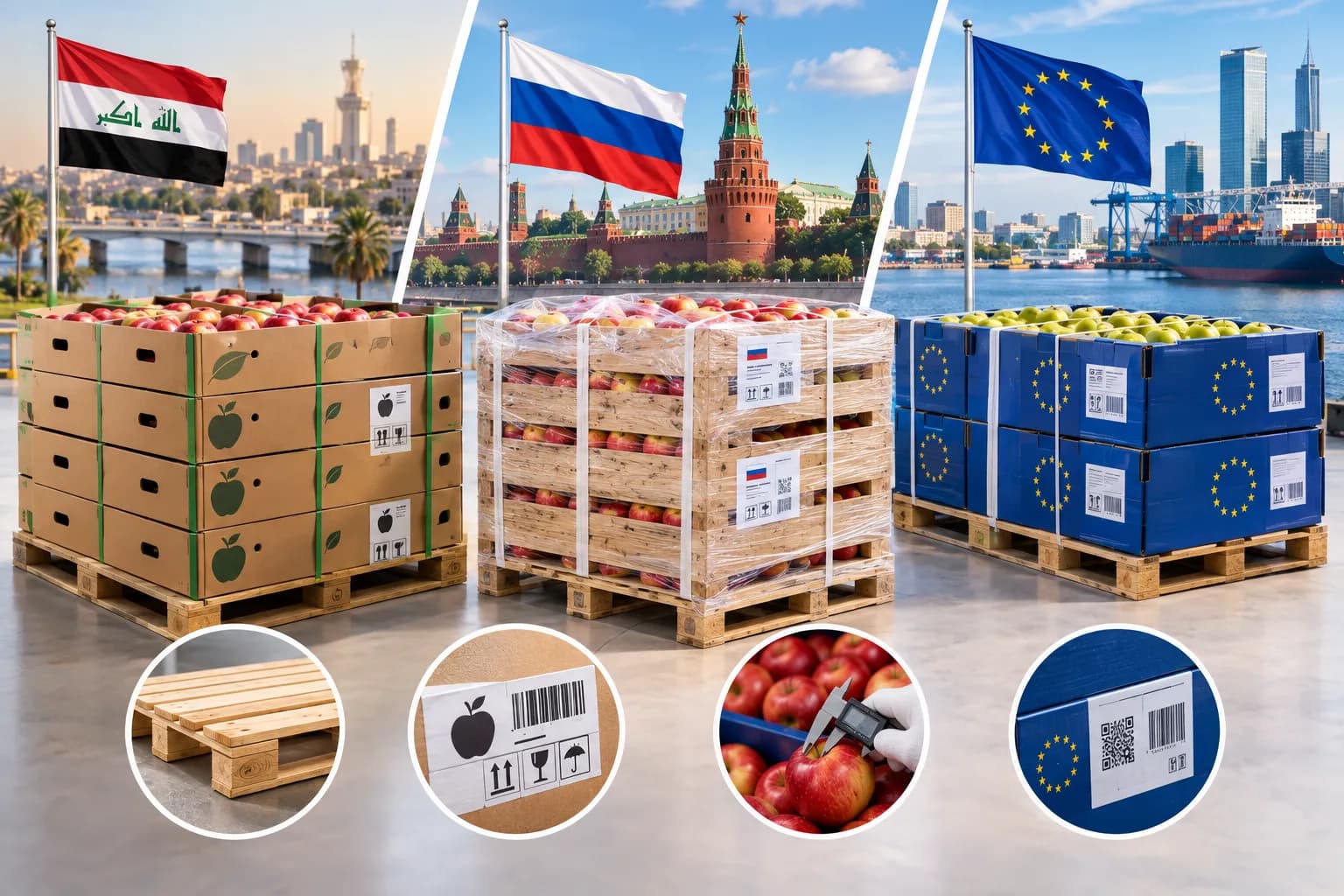
Even after you've found a genuinely trustworthy, well-known supplier (a separate topic on its own), most first-order disputes come from deal terms that simply weren't written down precisely enough. This checklist is about that part specifically: the deal itself, not the other side's credibility.
1. Write down exact product specs
Before agreeing on price, nail down the variety, quality class (Extra, Class I, Class II), size range, weight, and packaging type in writing. "Grade-A apples" isn't specific enough — you need to know exactly what standard that phrase is measured against.
2. Ask for a real sample or photo of the actual shipment
A stock photo, or a sample from a different shipment, guarantees nothing about the batch you're actually paying for. Before you pay, ask for real photos or video of the specific batch that will be loaded.
3. Lock down the Incoterm and the exact named place
Writing "FOB" or "CIF" alone isn't enough — the exact city or port needs to be named too ("FCA Urmia," for example). For truck exports into Iraq, make sure you're using the correct land-transport rules, not sea-freight ones.
4. Pin down the payment method and timing
Specify what percentage is paid in advance, when and how the balance is paid (documentary collection, letter of credit), and who covers the bank transfer fees.
5. Clarify who's responsible for export documents
Decide which side pays for the phytosanitary certificate, the certificate of origin, and any required standards certificate, and who's responsible for getting them ready on time.
6. Agree on the quality-inspection method at arrival, in advance
Decide who inspects the shipment and how if it arrives below the agreed quality, what level of variance is acceptable (based on the tolerances common in international fresh produce standards), and how compensation works if there's a mismatch.
7. Set the loading window and a delay penalty
Because fruit is perishable, a delay of just a few days can knock down the value of the whole shipment. Specify the exact loading window and what happens if it's missed.
8. Put everything in one written contract or purchase order
Agreeing on details over WhatsApp isn't enough. A written contract or proforma invoice covering everything above becomes the shared reference point if a dispute comes up.
9. Start with a small trial order
Before committing to a long-term contract or a large volume, a smaller order shows you whether the deal in practice matches what was agreed on paper.
Where Oriex fits in
On Oriex, product specs, the Incoterm, payment terms, and required documents are recorded clearly in each deal's profile, so both sides know exactly what they agreed to from the start. If you want a deal with clear, documented terms, take a look at signing up on Oriex.