For a buyer sourcing fruit from Iran for the first time, the biggest source of anxiety usually isn't price — it's not knowing which documents a legitimate supplier should have, or who is responsible for what. This guide walks through the full export path an Iranian exporter has to follow, so you know exactly what to ask for before you commit to a deal.
Step one: the trade card
Before anything else, an Iranian exporter must hold a trade card (kart-e bazargani) issued by the Iran Chamber of Commerce. It's the legal license required to conduct international trade — without it, customs will not release a shipment no matter how complete the rest of the paperwork is. It's worth confirming a supplier has one before you sign anything.
Core documents that should travel with every shipment
Commercial invoice: buyer, seller, goods, value, and payment terms.
Packing list: carton or pallet count, weight, and dimensions.
Certificate of origin: issued by the Chamber of Commerce, confirming the goods were produced in Iran. Many buyers and banks require it, especially when a letter of credit is involved.
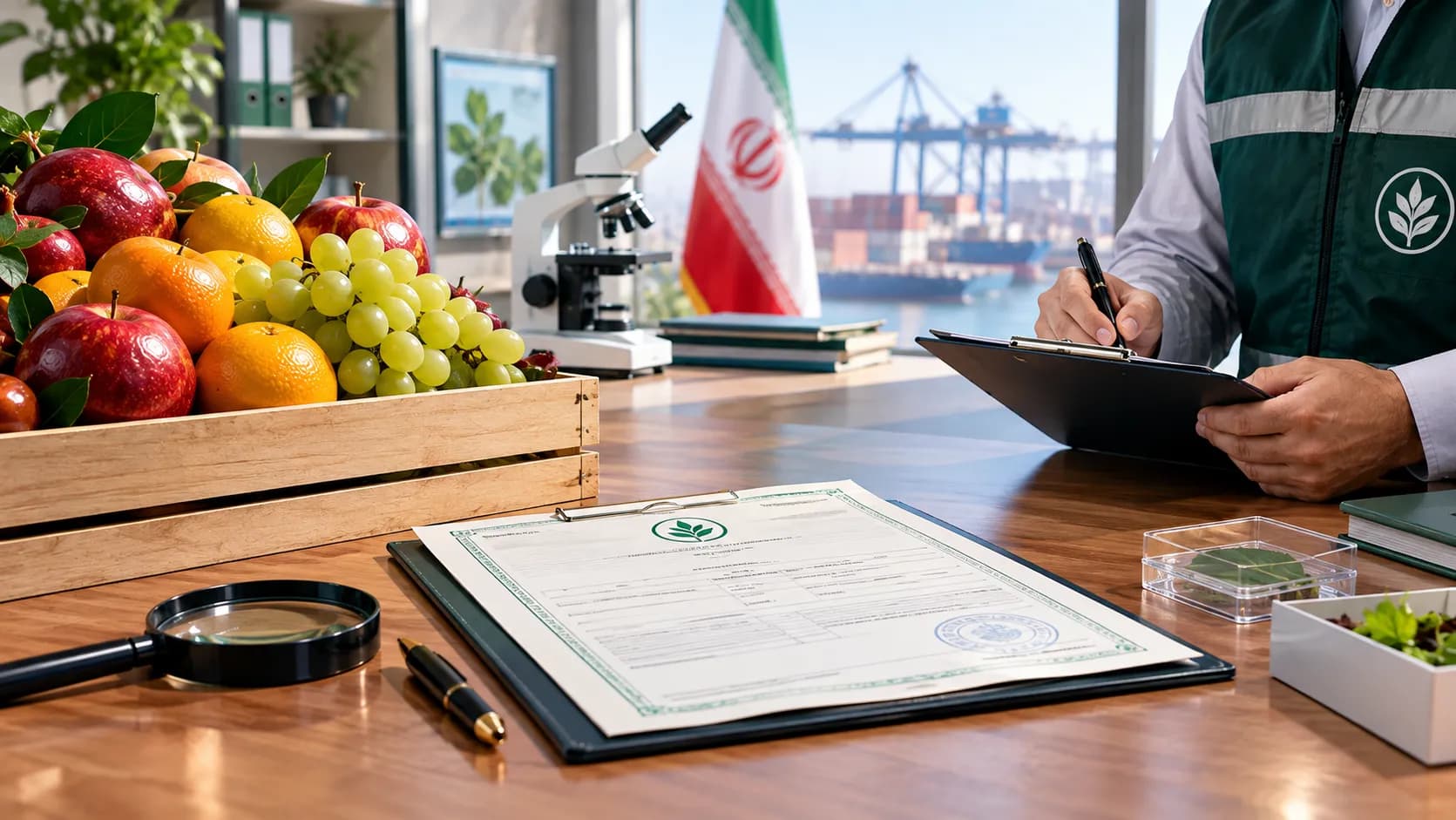
Phytosanitary certificate: issued by Iran's Plant Protection Organization (under the Ministry of Jihad-e-Agriculture), confirming the shipment is free of quarantine pests.
Fumigation/disinfection certificate: issued separately if the shipment required pest treatment.
Certificate of Conformity (COC) from Iran's National Standards Organization (INSO): required for goods subject to mandatory export standards — worth confirming with your supplier whether it applies to your product.
Bill of lading or road waybill: the transport document, which differs depending on whether the shipment moves by sea or by truck.
Cargo insurance certificate: depending on the agreed Incoterm, this sits with either the seller or the buyer.
Customs registration and the mandatory customs broker
Every exporter has to register in Iran's customs system and file an export declaration. Using a licensed customs broker is mandatory for commercial clearance, which is why smaller exporters typically hand this part over to a broker or freight forwarder.
A note for Iraqi buyers: the land route replaces the port
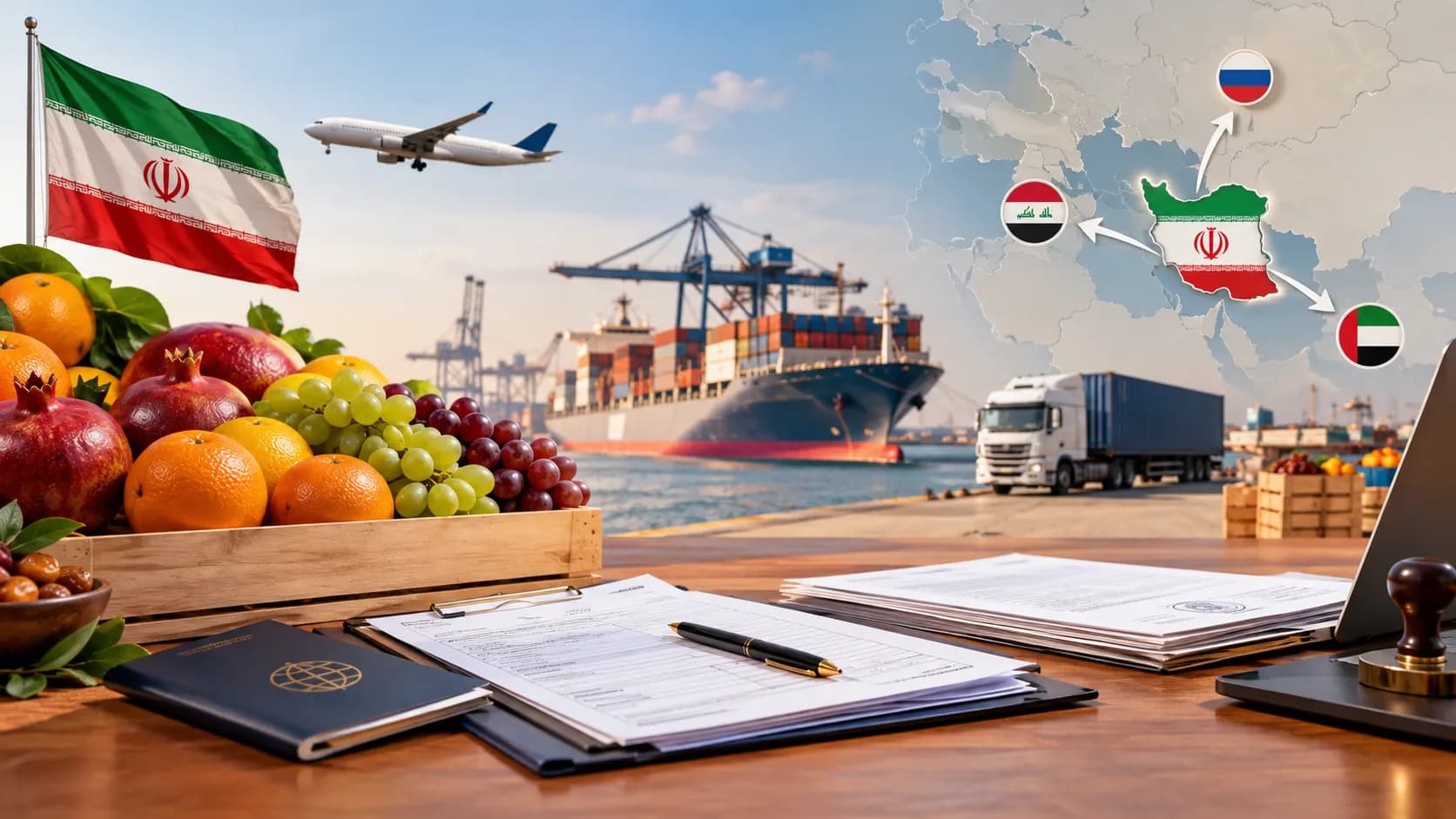
A large share of fruit exports from West Azerbaijan into Iraq moves through land border crossings by truck, not through southern seaports. That means a road waybill is used instead of a sea bill of lading, and the timeline and cost look very different from the port route (Bandar Abbas, Bushehr, Khorramshahr, or Imam Khomeini Port) used for farther markets like the UAE.
A note on destination country: some documents need embassy legalization
For certain destinations, including Iraq and the UAE, the certificate of origin or commercial invoice may need to be legalized by that country's embassy in addition to the Chamber of Commerce stamp. Confirm this with your supplier or their trade representative before shipping so the consignment doesn't get held up at destination customs.
Common mistakes that hold shipments at customs
Mismatched weight or quantity across the commercial invoice, packing list, and phytosanitary certificate
A phytosanitary certificate issued too far in advance of the actual loading date
Missing a COC on a product that's subject to a mandatory standard
No prior confirmation on whether the destination country requires embassy legalization
How Oriex simplifies this
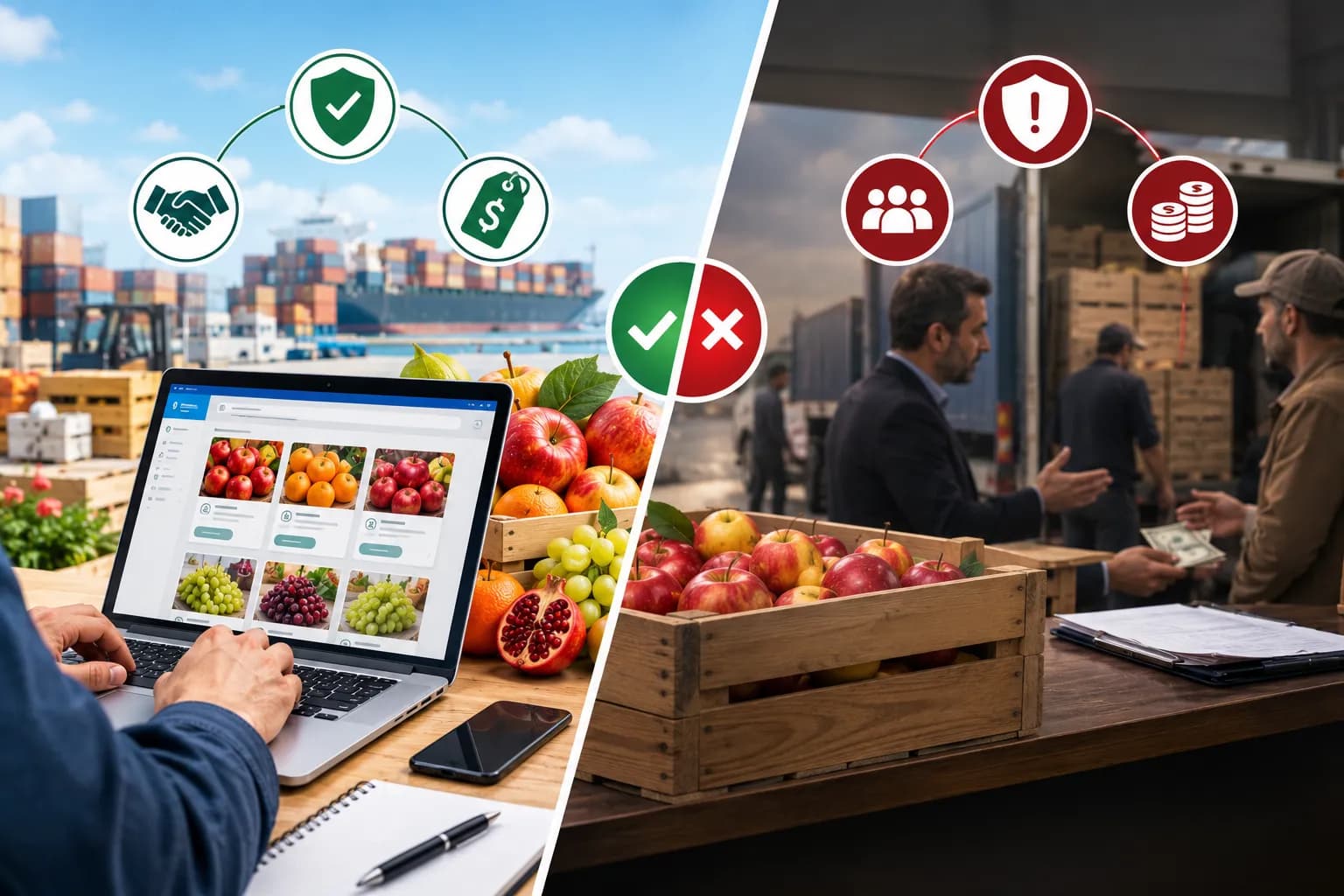
The biggest obstacle for a buyer isn't finding fruit — it's verifying that a supplier's paperwork is real and complete before money moves. Oriex connects verified sellers in West Azerbaijan directly with real buyers in Iraq, Russia, the UAE, and Central Asia, with document verification built into onboarding. If you're sourcing fruit for import, sign up on Oriex.