Unlike most goods, fruit only lasts a few weeks. That means a payment method that's perfectly reasonable for a shipment of industrial equipment might not work at all for a shipment of apples or cherries. Which method you choose directly affects both sides' cash flow and risk.
The main methods
Advance payment
The buyer pays part or all of the amount before the shipment goes out. Lowest risk for the seller, highest risk for the buyer, since there's no guarantee of receiving goods that match the contract.
Open account
The exact opposite of advance payment: goods ship first, and the buyer pays later, on agreed terms. Lowest risk for the buyer, highest for the seller. This is typically only used between parties with a long trading history and high mutual trust.
Documentary collection
A bank acts as an intermediary, holding the shipping documents (like the bill of lading) until the buyer either pays (D/P) or accepts a bill of exchange (D/A). The bank takes on no payment obligation — it's purely handling the documents. Risk here sits between advance payment and open account.
Letter of credit (LC)
The buyer's bank commits to paying the seller once documents matching the LC's terms are presented. This is usually the safest option for a new relationship or a deal where trust hasn't been established yet, because the payment obligation sits with a bank, not with the buyer personally.
The key point for fruit: sight LCs beat usance LCs
There are two main types of letter of credit: a sight LC, paid immediately once the correct documents are presented, and a usance LC, which delays payment for several months. For a perishable good like fruit, a sight LC is usually the more sensible choice — the seller needs cash quickly and can't afford to wait months.
Something Iranian exporters should know
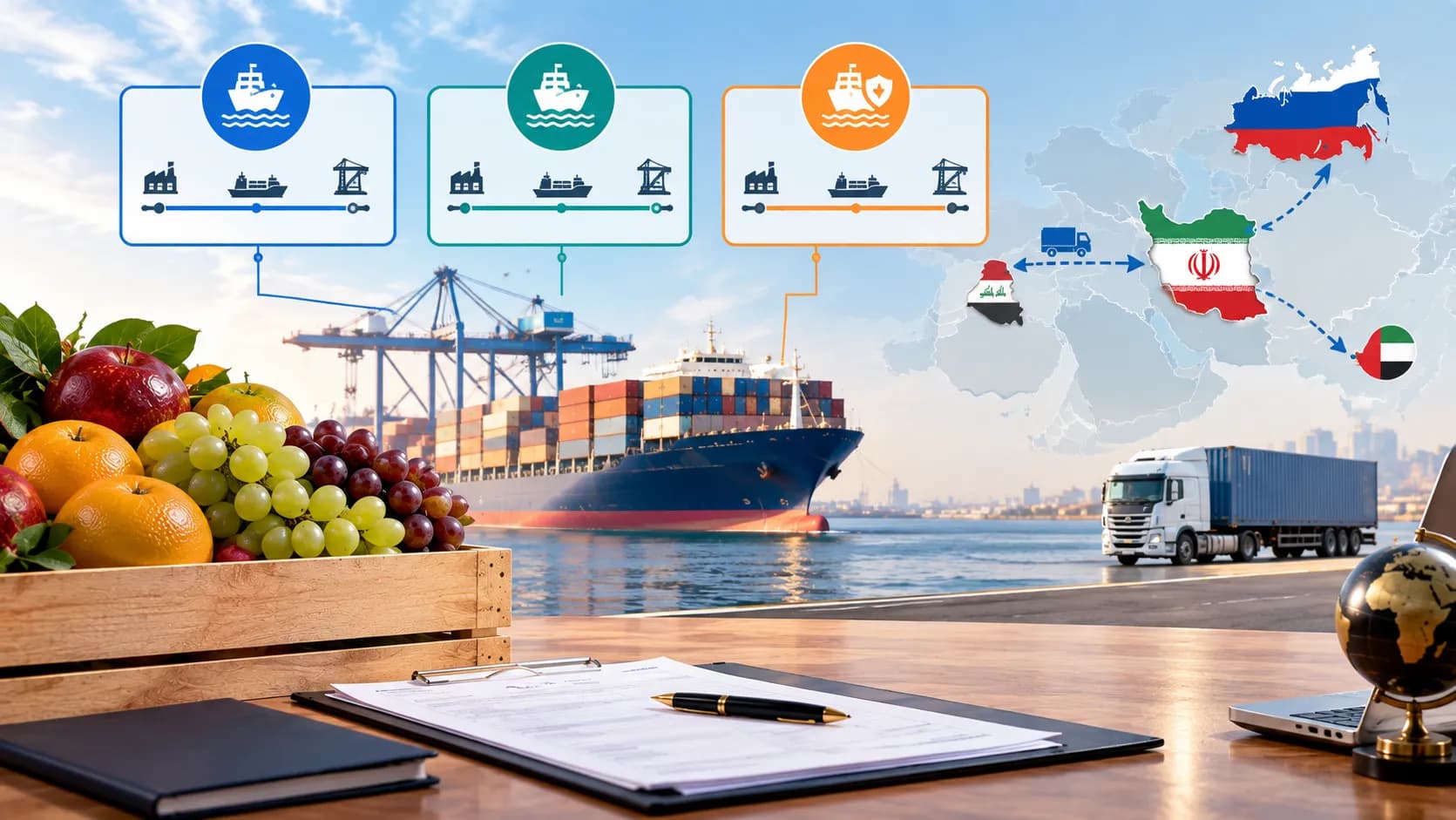
International banking restrictions and limited access to the SWIFT network make opening or confirming a letter of credit through major international banks more complicated for many Iranian exporters than it would otherwise be. In practice, a large share of trade between Iran and Iraq and regional markets moves through regional banks, trusted exchange houses, or a mix of advance payment and settlement on delivery. Before agreeing on a payment method, confirm with your bank or exchange house that the actual transfer route works in practice, not just on paper.
A middle-ground approach that works in practice
For a deal where full trust hasn't been built yet, a common and sensible structure is: pay part of the amount upfront (say, 30–50%) as an advance, with the balance paid against shipping documents (documentary collection) or on delivery. This splits the risk between both sides without pricing the seller out of the deal.
Where B2B platforms help
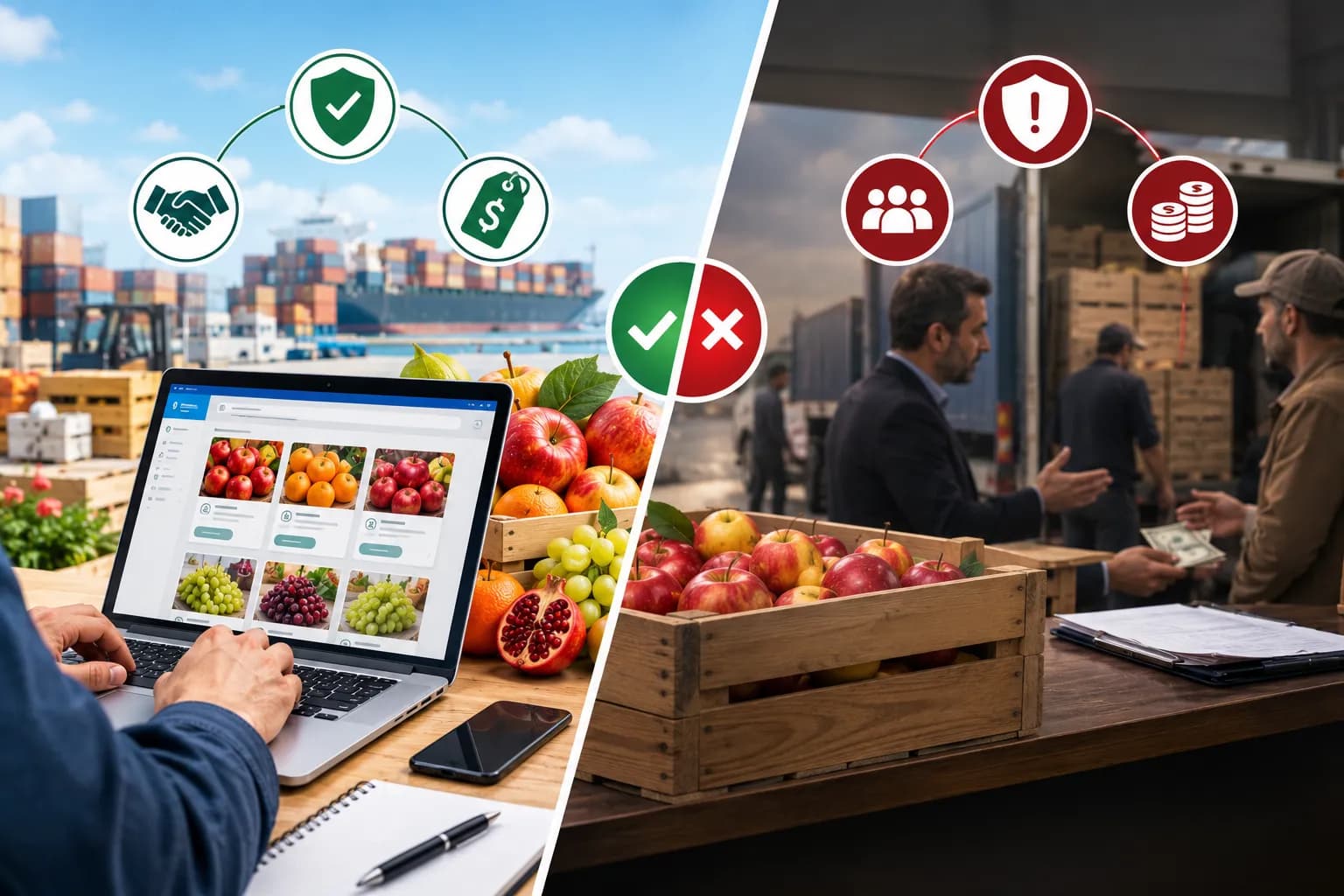
Some B2B platforms reduce payment risk further with escrow-like structures, where funds sit with a neutral intermediary until the shipment is confirmed received.
Where Oriex fits in
Oriex records each seller's accepted payment terms clearly as part of introducing both sides, so a buyer knows upfront which methods are workable before negotiations even start. If you're looking for a deal with clear payment terms, take a look at signing up on Oriex.